sales@adtech.co.uk


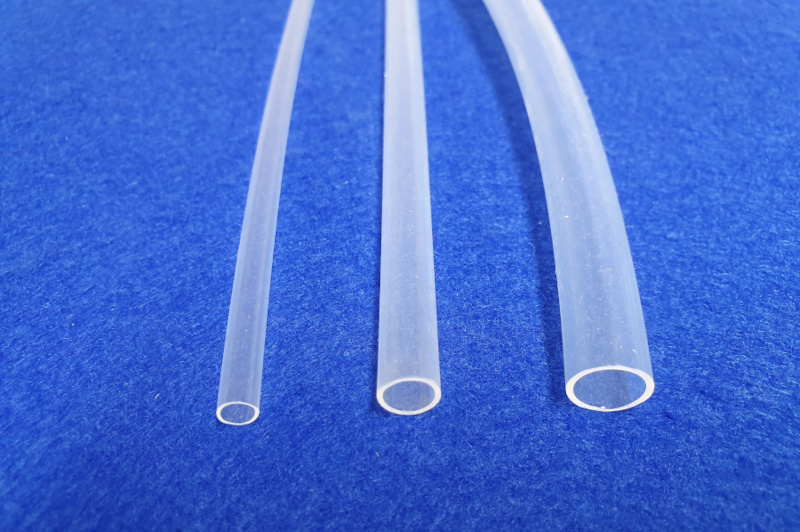
PFA, or Perfluoralkoxy, was developed as a high temperature version of FEP. PFA has similar properties to FEP but can be used at working temperatures up to +260°C while remaining melt-processable, thanks to a lower melt viscosity than PTFE.
What are the properties of PFA?
PFA enjoys several unique properties which make it suitable for use in medical, chemical and electrical applications, among others. PFA possesses the following properties:
- Very high working temperatures of maximum +260°C
- Very low working temperature of -200°C
- Non-stick characteristics
- Low friction surface
- Very high resistance to chemicals and solvents
- Very high electrical resistance
- Bio-compatibility
What are the advantages and disadvantages of PFA?
In addition to enjoying the unique properties of fluoropolymers, PFA differentiates itself by possessing the following benefits:
- Continuous working temperature of +260°C – Along with PTFE, PFA has the highest working temperature for any fluoroplastic
- Welding and re-moulding potential
- Protection against harsh environment conditions
- Insulation from electricity, heat, chemicals and solvents
- Good permeability resistance
- High purity grades available
- High clarity
PFA has similar physical and chemical properties to PTFE, but it has 10 times the flex life and less permeation. PFA has an outstanding crack and stress resistance and a low coefficient friction.
The main disadvantage of PFA is that it is more expensive than PTFE or FEP.
What is PFA used for?
From medical tubing to heat exchangers, semi-conductor baskets, pumps and fittings, and valve liners, PFA is widely used in applications that require a higher purity grade, excellent chemical resistance and a high working temperature.
PFA is ideal for temperature sensitive applications. It is routinely thermoformed to create closed end covers and can be safely shrunk over temperature sensitive materials without causing damage.