sales@adtech.co.uk


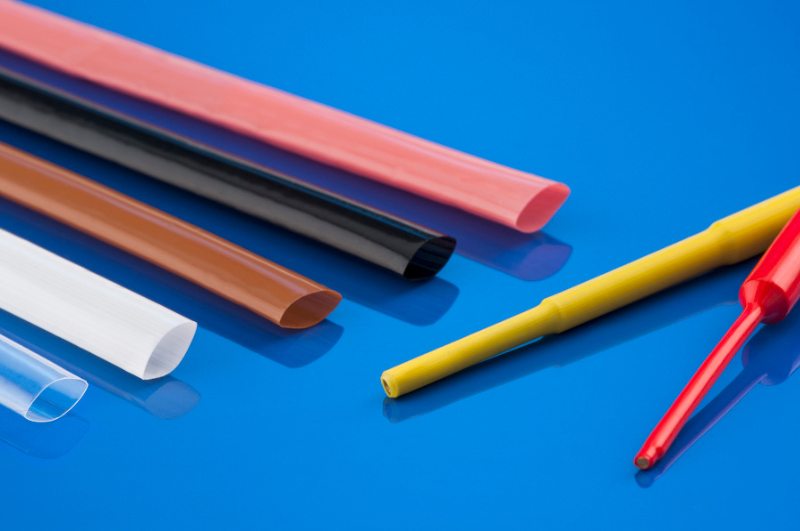
Heat shrink tubing is a versatile solution widely used across various industries for insulation, protection, and organisation of wires and components. Its ability to conform tightly to underlying materials upon heating makes it indispensable in many applications.
Understanding Heat Shrink Tubing
Heat shrink tubing is a thermoplastic tube that contracts when heated, forming a tight seal over the components it encases. This property is achieved by cross-linking polymers, which allows the tubing to “remember” its original size and return to it upon reheating.
Common Heat shrink Tube Materials
Heat shrink tubing is available in a variety of materials, each suited to different environments and applications. Choosing the right material ensures optimal performance and protection for your components.
Polyolefin is the most widely used material for general-purpose heat shrink tubing. It’s suitable for most environments, offering good electrical insulation, flexibility, and moderate chemical resistance. It operates effectively in temperatures up to 125°C and comes in a wide range of colours for easy identification. Polyolefin is available in common shrink ratios like 2:1 and 3:1, with adhesive-lined (dual wall) options for enhanced environmental sealing.
PVC heat shrink is a more budget-friendly alternative, ideal for basic insulation and cable organisation. While less flexible and with a lower temperature tolerance than polyolefin, it still serves well in non-critical, indoor applications.
Fluoropolymer heat shrink tubing offers superior resistance to chemicals, UV radiation, and extreme temperatures, making it ideal for aggressive or outdoor environments.
- FEP provides excellent chemical resistance and works in higher temperature ranges, typically with a 1.6:1 shrink ratio.
- PTFE is extremely durable, non-stick, and can handle temperatures up to 260°C. Like FEP, it usually comes with a lower shrink ratio and is chosen for highly demanding applications.
- PVDF offers a balance between mechanical toughness and chemical resistance, often used in aerospace and military-grade wiring.
Each material brings its own strengths, so understanding your environment and performance needs is key to picking the right one.
Common Applications of Heat Shrink Tubing
Electrical Insulation
One of the primary uses of heat shrink tubing is to insulate wires, preventing electrical shorts and protecting against environmental factors. It’s commonly used in automotive, aerospace, and consumer electronics industries.
Mechanical Protection
Heat shrink tubing provides abrasion resistance and strain relief, safeguarding components from mechanical stress and extending their lifespan. It’s particularly useful in environments where cables are subject to movement or friction.
Environmental Sealing
With the addition of adhesive-lined variants, heat shrink tubing can offer moisture and chemical resistance, making it suitable for marine and outdoor applications. This sealing capability ensures the longevity and reliability of the protected components.
Cable Organisation
Beyond protection, heat shrink tubing aids in bundling and organising cables, improving aesthetics and reducing clutter in complex wiring systems. It’s a preferred choice in data centres and telecommunications for maintaining orderly cable arrangements.
Identification and Colour Coding
Available in various colours, heat shrink tubing serves as an effective method for colour-coding wires and components, facilitating easy identification and maintenance. This is especially beneficial in intricate electrical systems.
Industry-Specific Uses
Medical Devices
In the medical field, heat shrink tubing is utilised for insulating and protecting components in devices like catheters and surgical instruments. Its biocompatibility and ability to withstand sterilisation processes make it ideal for such applications.
Automotive and Aerospace
Heat shrink tubing is extensively used in automotive and aerospace industries for wire harnessing, providing insulation and protection against extreme temperatures and environmental conditions. Its reliability ensures the safety and functionality of critical systems.
Marine Applications
In marine environments, heat shrink tubing offers corrosion resistance and waterproofing for electrical connections, ensuring durability and performance in harsh conditions. It’s a standard solution for boat wiring and offshore equipment.
Conclusion
Heat shrink tubing’s adaptability and protective qualities make it a vital component across various industries. Whether for insulation, protection, or organisation, its applications are vast and essential for maintaining the integrity and efficiency of electrical and mechanical systems.