bespoke fabrications
fluoroplastic chemical etching
Fluoropolymers like PTFE offer exceptional resistance and durability, but their non-stick nature makes bonding a challenge.
Chemical etching overcomes this by enabling secure adhesion where traditional methods fail, critical for high-spec assemblies across aerospace, medical, and industrial sectors.
Chemical etching modifies the surface chemistry of fluoropolymers, converting them from inert and non-stick to highly bondable. By breaking down fluorine-carbon bonds at the molecular level, the process creates a micro-rough, reactive layer that ensures strong adhesion without compromising the base material’s integrity. This makes it possible to integrate PTFE and similar materials into complex, multi-material systems with precision and confidence.
At Adtech, we deliver specialist chemical etching services tailored for demanding applications. Our etched PTFE components are trusted across industries where performance, reliability, and process control are non-negotiable. With decades of fluoropolymer expertise, we provide consistent, high-quality results that meet the technical standards your project demands.
Materials We Etch
Adtech provides chemical etching services for a wide range of fluoropolymer materials and components, including PTFE, FEP, PFA, PVDF, ETFE, and E-CTFE.
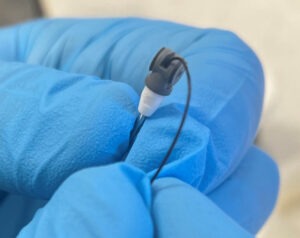
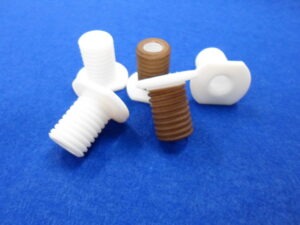
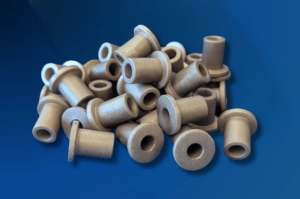
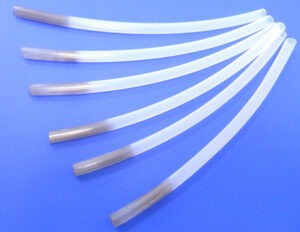
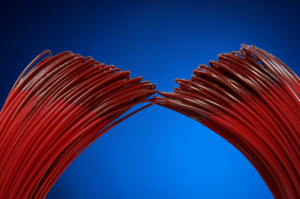
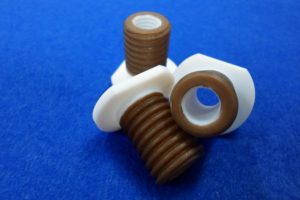
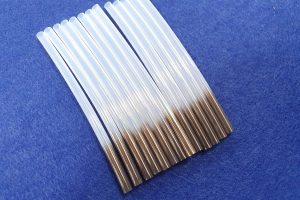
Our capabilities cover semi-finished parts, fluoropolymer tubing, heat shrink tubing, sleeving, liners, formed components, custom fabricated assemblies, fluoropolymer coated wires, and made-up wire assemblies. We also support specialist requirements including dip etching, controlled etch lengths, internal and external diameter treatment (ID and OD), and masked-off areas for selective etching.
We support both prototype and production quantities, including precision medical and high-purity applications.
How does Chemical Etching Work?
Fluoropolymers such as PTFE are prized for their chemical resistance and thermal stability, but their low surface energy makes them notoriously hard to bond. Chemical etching solves this by altering the surface at the molecular level.
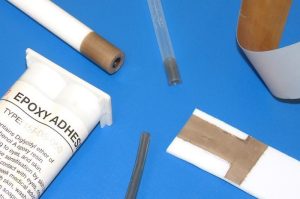
The process begins with meticulous cleaning, followed by application of a reactive solution (commonly sodium naphthalene) that breaks fluorine-carbon bonds to activate the surface. This process then creates the etched surface. The treated area is then neutralised, rinsed, and quality-tested. The result: a surface ready for adhesives, coatings, or composite bonding, without mechanical abrasion or damage to its core properties.
Industrial Applications
Etched fluoropolymers are vital in industries where performance, reliability, and chemical resistance are critical:
Medical & Pharmaceutical: Ideal for cleanroom-ready tubing, labware, and sealed components in sterile environments.
Oil & Gas: Performs in extreme pressures and corrosive settings such as slide bearings and downhole seals.
Electronics & Semiconductors: Enables bonding without compromising PTFE’s superior dielectric properties.
Food & Beverage: Durable, hygienic seals and linings resistant to harsh chemicals and high temperatures.
Adtech supports each sector with precision-etched fluoropolymers, including PTFE, FEP, and PFA. All tailored to demanding specifications.
Why Engineers Choose Adtech
With decades of fluoropolymer processing expertise, Adtech supports industries where consistency, precision, and material performance are critical.
Our capabilities include:
- Precision fluoropolymer tubing expertise
- Medical and high-purity application support
- Custom fabrication integration
- Prototype to production capability
- UK-based technical support
- Controlled processing and inspection
We support customers requiring reliable adhesion performance without compromising the core properties of PTFE, FEP, or PFA materials.
Medical Applications for Etching
In medical device manufacturing, fluoropolymers are chosen for their biocompatibility, low friction, and chemical resistance. However, their naturally non-stick surfaces make bonding or coating difficult. Chemical etching solves this by creating a bondable surface, while the bulk properties of the polymer remain unchanged.
Learn more
How to choose the right etched PTFE manufacturer
Choosing a specialist etched PTFE manufacturer is crucial when your application...
Industrial applications of Chemical Etching in Fluoropolymers
Chemical etching of fluoropolymers, especially PTFE, plays a vital role in enabling reliable...
Understand how does Chemical Etching Work?
Understanding chemical etching Chemical etching, in the context of fluoropolymers, is...
Case study: Chemically etched PTFE billets
We worked with a customer to chemically etch large diameter PTFE...
Medical FAQs
General FAQs
Why is fluoropolymer etching used in medical devices?
It allows adhesives and coatings to bond securely to PTFE, FEP, and other fluoropolymers—critical for catheter liners, guidewires, and other medical assemblies.
Which medical components benefit most from etching?
Examples include catheter and guidewire liners, vascular sheaths, and fluid-handling tubing in pumps and sterile systems.
Does etching affect biocompatibility or sterilisation performance?
No. Etching modifies only the surface. The polymer remains biocompatible and withstands common sterilisation processes such as autoclaving and hydrogen peroxide gas sterilisation.
Can only part of a medical component be etched?
Yes. Using custom masking, we can etch specific areas—such as the ID, OD, or designated sections—while leaving the rest of the component untreated.
Is fluoropolymer etching suitable for cleanroom manufacturing?
Yes. Etching can be integrated into clean production workflows, enabling medical device components to be prepared for adhesive bonding or coating in controlled environments.
What is fluoropolymer chemical etching used for?
Chemical etching is used to create a bondable surface on fluoropolymers such as PTFE, FEP, and PFA, allowing them to adhere to adhesives, metals, coatings, and composite materials.
Why is PTFE difficult to bond without etching?
PTFE has an extremely low surface energy, giving it non-stick properties that make adhesives ineffective without surface treatment. Chemical etching modifies the surface to enable reliable bonding.
What industries use etched fluoropolymers?
Etched fluoropolymers are widely used across:
- Oil & gas
- Aerospace
- Electronics
- Medical
- Chemical processing
- Food production
- Industrial manufacturing
Applications include slide bearings, liners, seals, tubing, diaphragms, and bonded assemblies.
Can fluoropolymer tubing be chemically etched?
Yes. Adtech can chemically etch fluoropolymer tubing, including selective ID, OD, and sectional etching depending on application requirements.
Does chemical etching affect the chemical resistance of PTFE?
Chemical etching modifies only the surface layer required for bonding. The core material retains the key performance properties fluoropolymers are known for, including chemical resistance and thermal stability.