From water purification and UVC disinfection to environmental monitoring and industrial fluid handling, material selection plays an important role in the reliability and performance of treatment equipment.
Components used in these environments may be exposed to chemicals, moisture, temperature changes and ultraviolet radiation. Materials must be selected to withstand these conditions while maintaining their intended function.
Fluoropolymers such as PTFE, FEP and PFA are widely used in specialist industrial applications because of their chemical resistance, thermal stability and durability. Their properties make them suitable for a range of environmental applications, including water treatment equipment, sampling systems and protective components.
Why Are Fluoropolymers Suitable for Environmental Applications?
Environmental and water treatment equipment often operates under demanding conditions. Exposure to chemicals, cleaning agents and varying temperatures can affect component performance, making material compatibility an important consideration.
Fluoropolymers offer several useful characteristics:
- Chemical resistance: PTFE, FEP and PFA resist a wide range of chemicals, making them suitable for fluid handling and protective applications.
- Thermal stability: Their ability to operate across a broad temperature range supports use in demanding industrial environments.
- Low-friction surfaces: Useful in applications where smooth material surfaces and reduced adhesion are beneficial.
- Electrical insulation: Provides protection for sensors and electrical components exposed to demanding operating conditions.
- UV resistance: Certain fluoropolymers, particularly FEP, are suitable for components exposed to ultraviolet radiation.
These properties make fluoropolymers an option for equipment manufacturers developing systems for water treatment, environmental analysis and industrial processing.
Fluoropolymers in UVC Water Treatment and Disinfection
One important application is UVC water treatment, where ultraviolet light is used to inactivate microorganisms.
UVC disinfection works by exposing water to ultraviolet radiation at wavelengths capable of damaging the DNA or RNA of microorganisms, preventing them from reproducing. It is an established method used in drinking water and wastewater treatment, although its effectiveness depends on the system design, water quality and the UV dose delivered.
Fluoropolymers can play a supporting role in the equipment used for this process.
FEP is particularly useful for UVC applications because it combines resistance to UV exposure with the ability to transmit UVC light.
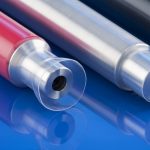
Adtech supplies shatterproof FEP lamp coatings and quartz tube solutions suitable for specialist UV applications, including water treatment.
FEP coatings can provide a protective layer around UV lamps, helping to retain glass fragments and lamp contents in the event of breakage while allowing UV radiation to pass through.
Maintaining suitable UV transmission is important to the performance of the overall system. The amount of light transmitted depends on factors including material thickness, wavelength and operating conditions.
Adtech has published FEP UV transmission data explaining how different coatings and operating conditions can affect lamp output.
For equipment manufacturers, selecting the correct FEP material and coating thickness is therefore an important part of the design process.
Supporting Water Treatment and Fluid Handling Systems
Beyond UVC disinfection, fluoropolymers are used in equipment where liquids and treatment chemicals need to be transferred, contained or processed.
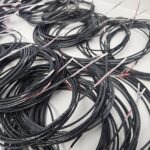
Materials such as PTFE tubing and PFA tubing offer chemical resistance and thermal stability, making them suitable for various industrial fluid handling applications.
Another example is expanded PTFE (ePTFE), a microporous form of PTFE that can allow gases to pass through its structure.
In a previously documented Adtech water purification project, specially manufactured ePTFE tubing was used to introduce an ozone-containing gas mixture into iron-rich water.
The porous tubing enabled the gas to pass into the water, supporting the treatment process.
This demonstrates how the properties of fluoropolymers can be incorporated into specialist water treatment equipment, particularly where standard tubing cannot provide the required functionality.
Environmental Monitoring, Sampling and Sensor Protection
Fluoropolymers also have applications in environmental monitoring, where accurate sampling and reliable equipment performance are essential.
Air quality testing, gas emissions monitoring and industrial sampling can require materials that minimise interactions with the substances being collected.
Adtech manufactures FEP gas sampling bags for applications requiring low contamination and low gas permeability. The company also supplies Tedlar® PVF gas sample bags used for gas, odour and volatile organic compound (VOC) sampling.
In addition, fluoropolymer coated probe covers can protect temperature and level detection sensors from corrosive substances and challenging operating conditions.
These applications demonstrate the importance of material selection throughout environmental equipment, from collecting representative samples to protecting the components responsible for measurement and control.
Choosing the Right Fluoropolymer for Environmental Equipment
There is no single fluoropolymer suitable for every environmental application. The right choice depends on the specific operating conditions and the function of the component.
Factors such as chemical exposure, working temperature, UV transmission, pressure and component geometry all need to be considered.
At Adtech, we manufacture fluoropolymer tubing, heat shrink sleeving, protective coatings and bespoke fluoropolymer fabrications to suit specialist industrial requirements.
Whether developing a UVC water treatment assembly, protecting a sensor or specifying tubing for an environmental monitoring system, our team can provide technical guidance and help identify a suitable material and manufacturing approach.
Contact Adtech to discuss your application and fluoropolymer requirements.