FEP film is a small part of a resin 3D printer, but it has a direct effect on the printing process.
The film forms the transparent bottom of the resin vat. UV light passes through it to cure each layer of liquid resin, while the smooth surface allows the cured layer to separate as the build platform moves.
For printer manufacturers and commercial users, the performance of this film affects print consistency, maintenance and the risk of failed builds.
Where is FEP film used in the printer?
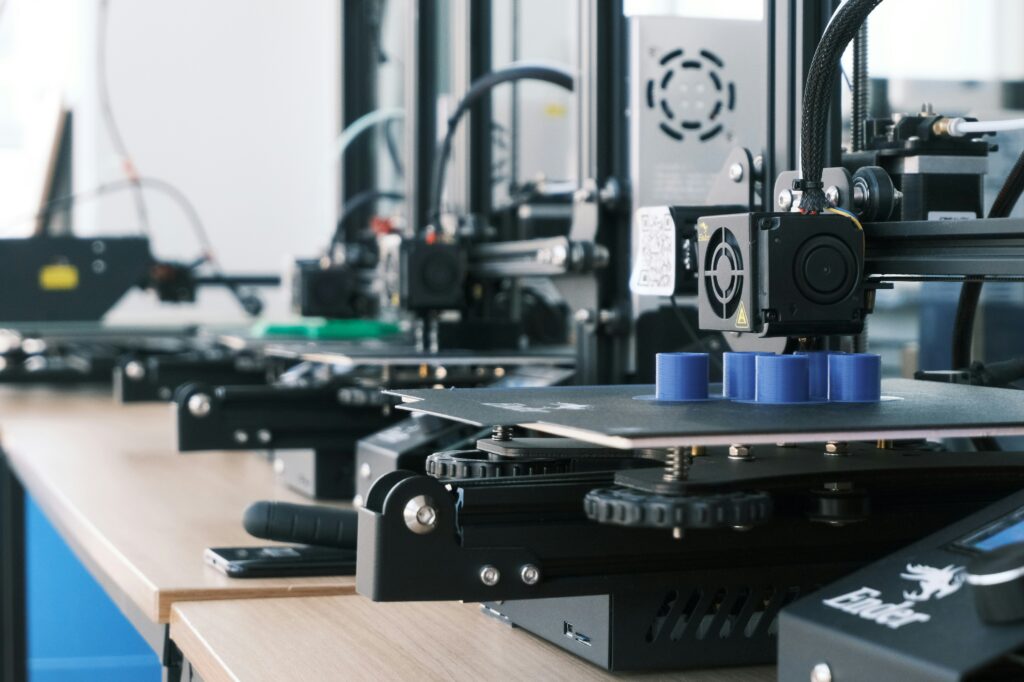
In many resin printers, the liquid photopolymer is held in a shallow tank or vat above the UV light source.
The bottom of the vat must perform two functions:
- Allow sufficient UV light to reach the resin.
- Release the newly cured layer so the next layer can be formed.
FEP film is widely used for this purpose. It is tensioned across the bottom of the vat and replaced when it becomes damaged, cloudy, stretched or punctured.
This application relates specifically to resin-printing systems. FDM or filament printers may use PTFE tubing elsewhere in the machine to guide filament, but they do not use FEP film as a resin-vat release layer.
Why is FEP suitable?
High light transmission
The film must allow UV light to pass through consistently.
Reduced transmission can affect resin curing and print quality. FEP is transparent and provides good transmission of UV and visible light, making it suitable for the base of the vat.
The required transmission level should be assessed against the printer’s wavelength, exposure system, film thickness and resin profile.
Non-stick and low-friction surface
Each cured resin layer must separate from the film.
FEP provides an anti-stick, low-friction surface that reduces adhesion between the cured layer and the bottom of the vat. Printer manufacturers describe this release behaviour as important for clean layer separation and reliable printing.
The film still experiences repeated peel forces during use, so tension, surface condition and printer settings remain important.
Chemical resistance
The film is in continuous contact with liquid resin during a print.
FEP offers resistance to a wide range of chemicals and solvents, along with very low moisture absorption. These properties support its use as a barrier between the resin and the printer’s light source or display.
Compatibility should still be confirmed for the specific resin formulation, cleaning process and service conditions.
Temperature performance
FEP can operate at temperatures well above those normally reached within a resin vat.
The raw polymer manufacturers data for FEP resin specifies a working-temperature range of approximately -200°C to 200°C for FEP.
The more relevant consideration for printer manufacturers is usually dimensional stability and film consistency during repeated curing and peel cycles.
What should manufacturers consider when specifying FEP film?
Film thickness
Thickness affects flexibility, durability, light transmission and the distance between the light source and the resin.
A film that is too thick or too thin for the vat design may alter printing behaviour. The thickness must therefore be treated as a controlled component specification rather than a generic consumable.
Adtech stocks 50-micron FEP film in a standard roll width of 1,220mm and can source other thicknesses from upto 2.4mm.
The final thickness should be selected and validated against the printer design.
Surface consistency
Scratches, dents, contamination and clouding can interfere with printing.
Prusa warns that a dirty, cloudy or damaged film can negatively affect print quality and may block enough UV light to prevent resin curing correctly. Phrozen lists severe scratches, clouding, loss of tension and punctures among the signs that a release film needs replacement.
For commercial production, incoming inspection and clear replacement criteria help reduce unexpected failures.
Dimensional consistency
The film must fit the vat frame correctly and maintain the intended tension after installation.
Printer manufacturers should define:
- Cut dimensions
- Thickness tolerance
- Surface condition
- Protective-film requirements
- Installation method
- Tensioning process
- Inspection criteria
- Packaging and storage
- Batch traceability
- Replacement intervals or condition checks
These controls become increasingly important when multiple printers or production sites use the same replacement-film specification.
Supply continuity
A proprietary vat size can create supply problems if replacement film is only available as a model-specific spare part.
Manufacturers and commercial print operators may benefit from specifying film in a controlled sheet or roll format that can support repeat purchasing and planned maintenance.
The technical specification should remain linked to the validated printer design. Changing film type, thickness or surface characteristics may require new printer settings or further testing.
FEP, PFA and alternative release films
FEP is no longer the only film used in resin printers.
Some printer manufacturers also offer PFA, commonly marketed as nFEP, and ACF release films. These materials have different surfaces and peel behaviour and may be selected for particular printing speeds or machine designs.
This does not make FEP obsolete. It remains an established release-film option with strong transparency, chemical resistance and anti-stick properties.
The correct choice depends on:
- Printer mechanics
- Build area
- Exposure wavelength
- Resin formulation
- Peel forces
- Printing speed
- Required film life
- Replacement cost
- Validated machine settings
Manufacturers should evaluate the film as part of the complete printing system rather than changing it independently.
Supporting manufacturers and commercial users
Adtech supplies FEP film for 3D-printing, mould-release and other industrial applications.
For printer manufacturers, equipment developers and commercial users, the key requirement is a reliable material specification that can be purchased consistently and incorporated into maintenance or production planning.
Adtech’s technical team can discuss film thickness, operating conditions, quantities and the wider fluoropolymer requirements of the printer, including PTFE tubing and formed components used elsewhere in some machine designs.
Have a similar requirement? Get in touch