PTFE and PFA are both fully fluorinated polymers used where ordinary plastics struggle with aggressive chemicals, high temperatures or demanding process conditions. Their headline performance can look very similar, particularly when temperature and chemical resistance are compared. The main distinction is processing: PFA is melt-processable, while PTFE requires specialist processing methods. That difference can have a major effect on component geometry, welding, surface finish and how easily a design can be manufactured.
PTFE vs PFA: the quick answer
Choose PTFE when you need proven high-temperature and chemical performance, very low friction, a broad range of standard tubing and forms, and the geometry can be produced using PTFE-specific processing methods.
Choose PFA when you need similar high-temperature and chemical resistance together with melt processability, welded or fused assemblies, transparency, smooth complex geometries or access to high-purity grades for contamination-sensitive systems.
| Property | PTFE | PFA |
| Adtech working-temperature guidance | -200°C to +260°C | -200°C to +260°C |
| Chemical resistance | Near-universal resistance to most industrial chemicals | Comparable to PTFE across most industrial chemicals |
| Processing | Specialist extrusion, moulding and sintering; not conventionally melt-processable | Melt-processable; suitable for extrusion, moulding, welding and fusion |
| Appearance | Typically opaque to translucent | More transparent than PTFE |
| High-purity options | Special grades available for regulated applications | High-purity grades widely used for critical fluid handling |
| Complex welded assemblies | Possible through specialist fabrication routes | Particularly well suited to fused and welded geometries |
| Typical decision driver | Performance, low friction, established forms and value | Processability, purity, smooth flow paths and complex fabrication |
Design note: the same polymer name can cover different grades and product forms. Pressure, chemical concentration, wall thickness, temperature cycling, sterilisation and regulatory requirements should be checked for the finished component.
What is PTFE?
PTFE is a fully fluorinated polymer recognised for exceptional chemical resistance, high-temperature stability, low friction and electrical insulation. Adtech’s PTFE technical overview positions it for chemical processing, semiconductor, medical, laboratory, food, pharmaceutical and electrical applications where a stable fluoropolymer barrier is required.
PTFE has a very high melt viscosity, so conventional melt processing is impractical. PTFE tubing is therefore manufactured using specialist fluoropolymer processes, with further forming and fabrication available when the application needs more than a standard straight tube.
What is PFA?
PFA, or perfluoroalkoxy polymer, is also fully fluorinated, but its molecular design allows it to be melt processed. Adtech’s PFA material guide describes chemical resistance comparable to PTFE together with improved fabrication flexibility, transparency and the availability of high-purity grades.
This makes PFA tubing particularly useful in fluid-handling systems where smooth internal surfaces, welded transitions and cleanliness are central to the design.
The main differences between PTFE and PFA
1. Temperature performance
Adtech lists both PTFE and PFA with working-temperature capability from -200°C up to +260°C. As a result, temperature alone often does not decide between them. The real engineering question becomes whether the component needs PTFE’s traditional low-friction forms or PFA’s melt-processable fabrication advantages at that temperature.
2. Chemical resistance
Both materials are used for highly aggressive process media. Adtech describes PFA as providing chemical resistance comparable to PTFE across most industrial chemicals, while PTFE remains a benchmark material for broad chemical inertness. The PTFE chemical resistance and PFA chemical resistance guides show why operating conditions still matter. Temperature, pressure, mechanical stress and permeation can influence the performance of a tube or lining even where the polymer itself is chemically resistant.
3. Melt processability and manufacturability
This is the most important structural difference. PFA can be processed as a melt, allowing conventional extrusion and moulding as well as controlled fusion and welding. PTFE needs specialist routes because its melt viscosity is extraordinarily high. For simple tubing this may make little difference to the end user. For complex assemblies, PFA can create manufacturing options that are difficult to reproduce in PTFE.
Adtech’s fluoropolymer welding and sealing capability is particularly relevant where a component needs fused transitions, sealed ends or a continuous fluoropolymer flow path.
4. Purity and contamination-sensitive systems
Both polymers are available in grades suitable for demanding process environments, but PFA is especially associated with high-purity fluid handling because high-purity grades can be melt processed into smooth tubing, fittings and welded assemblies. Adtech lists semiconductor manufacturing, ultra-pure fluid handling, pharmaceutical systems and high-purity water among common PFA application areas.
The correct approach is to specify the required resin grade, manufacturing conditions, cleaning or packaging controls and compliance documentation, rather than assuming every PFA or PTFE product has the same purity profile.
5. Transparency and inspection
PFA can provide greater transparency than PTFE, which may help when visual inspection of a fluid path or component is useful. It is not as central a selection factor as it is in some FEP applications, but it can still support process visibility in laboratory, pharmaceutical and high-purity installations.
6. Friction and release behaviour
Both materials have smooth, non-stick surfaces. PTFE is particularly established where very low friction or release is the dominant requirement. PFA also provides low-friction, non-stick behaviour, with the added advantage that the material can be melt processed into complex shapes.
PTFE vs PFA tubing: which is better?
For a straight chemical-transfer line, both materials may be technically viable, so the decision may be driven by dimensions, availability, installation, pressure rating, purity requirements and total component design. PTFE tubing has a very broad standard-size offering and can be customised. PFA tubing becomes particularly attractive when the design also needs smooth fused joints, formed transitions or high-purity grades.
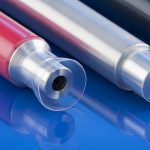
A useful example is Adtech’s precision swaged PFA tube assembly for a pharmaceutical application. The component used fused PFA tube sizes and very short, smooth swaged transitions to maintain a continuous internal flow path. This type of geometry demonstrates why PFA’s melt-processable nature can become a decisive design advantage.
When PTFE remains the stronger choice
PTFE remains a strong first choice for many chemical, mechanical and electrical applications because its performance is well established and it is available in a wide range of standard and specialised forms. If the design does not require melt welding, complex fused geometry or a PFA-specific purity requirement, PTFE can offer a direct and practical route to the required chemical and thermal performance.
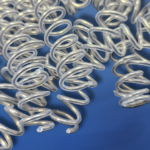
Adtech’s PTFE encapsulated spring case study shows a typical example. Thin-wall PTFE sleeving was used to protect a complex conical spring in an aggressive chemical environment without preventing the spring from compressing flat.
What about heat shrink?
Both PTFE and PFA are available as heat-shrink solutions, but the best choice depends on recovery behaviour, application temperature, installation heat and component geometry. The dedicated PTFE, FEP and PFA heat shrink comparison covers those product-specific considerations in more detail.
What about bonding?
PTFE and PFA have low-surface-energy, non-stick surfaces, so untreated parts can be difficult to bond with adhesives. If bonding is required, Adtech can provide chemical etching on selected internal, external or localised areas of the component. The bonding system must then be validated for the substrate, adhesive, temperature and chemical exposure involved.
So, is PFA better than PTFE?
PFA offers a major advantage when a high-performance fluoropolymer must also be melt processed, fused, welded or formed into a smooth complex component. PTFE remains highly effective where chemical resistance, temperature capability, low friction and established standard forms are the key requirements. The higher-specification material is only valuable when the application actually needs the characteristics it provides.
For components where material choice and fabrication route need to be developed together, Adtech’s R&D and product development service supports one-off development, pilot quantities and repeat manufacture.
Frequently asked questions
Are PTFE and PFA chemically the same?
No. Both are fully fluorinated polymers and share many performance characteristics, but PFA contains comonomer units that make the material melt-processable. PTFE has a different structure and extremely high melt viscosity.
Does PFA withstand the same temperature as PTFE?
Adtech lists both materials for working temperatures down to -200°C and up to +260°C. Finished-part limits can still be affected by pressure, geometry, mechanical load and the chemical environment.
Why is PFA used for high-purity tubing?
PFA is available in high-purity grades and can be melt processed into smooth tubing and welded assemblies, which makes it well suited to contamination-sensitive fluid handling. The actual resin grade and manufacturing controls still need to be specified.
Can PTFE and PFA be welded?
PFA is well suited to thermal fusion and welding because it is melt-processable. PTFE requires specialist fabrication and sealing methods rather than conventional thermoplastic fusion welding.