PFA and FEP are closely related melt-processable fluoropolymers. Both offer excellent chemical resistance, low-friction surfaces, electrical insulation and useful transparency. Their biggest practical difference is temperature capability. Adtech lists FEP for service up to +200°C and PFA up to +260°C, so the choice often comes down to whether the application genuinely needs PFA’s additional thermal margin, high-purity grade options or particular fabrication performance.
PFA vs FEP: the quick answer
Choose FEP when the operating temperature is within its range and the design benefits from high clarity, flexibility, lower-temperature processing, heat-shrink capability or cost-effective fabrication.
Choose PFA when the system needs similar melt-processability with a higher working temperature, high-purity grades, smooth fused assemblies or additional performance margin in demanding chemical and pharmaceutical process conditions.
| Property | FEP | PFA |
| Adtech working-temperature guidance | -200°C to +200°C | -200°C to +260°C |
| Chemical resistance | Broad resistance across many industrial media | Excellent resistance comparable to PTFE across most industrial chemicals |
| Transparency | High transparency | Transparent / translucent depending on grade and form |
| Processing | Melt-processable; lower processing temperature | Melt-processable; suitable for complex and welded assemblies |
| Flexibility | Very good, particularly in thin-wall tubing | Good flexibility with strong mechanical integrity |
| High-purity applications | Suitable grades available for regulated applications | High-purity grades widely used in critical fluid handling |
| Typical decision driver | Visibility, flexibility, fabrication and applications below 200°C | Higher temperature, purity and demanding process systems |
Engineering note: PFA should not be selected automatically because it has the higher temperature rating. If FEP meets the chemical, thermal, mechanical and compliance requirements, it can be the simpler and more economical material choice.
What is FEP?
FEP is a copolymer based on tetrafluoroethylene and hexafluoropropylene. It was developed to retain many of PTFE’s desirable characteristics while allowing conventional melt processing. Adtech’s FEP material guide highlights its combination of chemical resistance, clarity, flexibility, electrical insulation and ease of fabrication.
These characteristics make FEP tubing useful in laboratory systems, fluid transfer, analytical equipment, cable insulation, heat shrink, UVC-related applications and bespoke formed components.
What is PFA?
PFA is also a fully fluorinated, melt-processable polymer. It was developed to provide high-temperature performance closer to PTFE while retaining many of the processing advantages associated with FEP. Adtech’s PFA overview lists a maximum working temperature of +260°C together with chemical resistance, non-stick behaviour, electrical insulation and access to standard or high-purity grades.
PFA is therefore frequently considered for chemical processing, pharmaceutical systems, semiconductor and ultra-pure fluid handling where temperature, cleanliness and complex fabrication must be addressed together.
The main differences between PFA and FEP
1. Maximum working temperature
This is usually the clearest separator. Adtech lists FEP up to +200°C and PFA up to +260°C. If the continuous process temperature can approach or exceed 200°C, PFA provides the required additional margin. If the system operates comfortably below that level, the rest of the specification should determine whether moving to PFA adds meaningful value.
2. Chemical resistance
Both polymers are used for aggressive media. FEP provides broad resistance to many industrial chemicals, while PFA offers chemical resistance comparable to PTFE across most industrial chemicals. At elevated temperature, chemical permeation, pressure and mechanical stress can become more significant even when the polymer does not chemically degrade. Adtech’s FEP chemical resistance guide and PFA chemical resistance guide should therefore be read alongside the actual service conditions.
3. Transparency and process visibility
FEP is particularly valued for its clarity, which is one reason it is common in laboratory tubing, visual fluid paths and UVC-related systems. PFA can also provide useful transparency, but it is more often selected because the application needs the combination of processability, chemical resistance, purity and higher temperature capability.
4. Fabrication and welding
Both FEP and PFA are melt-processable, so each can be extruded, formed and welded using controlled thermal processes. This creates more freedom for complex tubing assemblies than is available with many conventional PTFE processing routes. Adtech supports both materials through thermoforming and fluoropolymer welding and sealing services.
The material decision should therefore consider how the finished component will be manufactured. An assembly requiring a simple clear formed tube may be well suited to FEP, while a higher-temperature, high-purity fused assembly may justify PFA.
5. High-purity applications
PFA is widely specified in high-purity and contamination-sensitive systems because high-purity resin grades are available and the material can be processed into smooth tubing and fused components. FEP can also be supplied in grades suitable for demanding medical and laboratory applications, but the required purity, extractables, sterilisation and regulatory criteria should be specified directly rather than inferred from the polymer name.
6. Cost and specification efficiency
PFA is generally a more specialised material and can carry a higher material cost than FEP. That cost is justified when the application needs its higher temperature capability, high-purity grade or particular mechanical and fabrication advantages. If FEP already meets the full operating envelope, specifying PFA can add cost without improving the real-world outcome.
PFA vs FEP tubing: which should you specify?
For tubing, start with the maximum continuous temperature and the chemical environment, then consider visibility, bend requirements, pressure, purity and how the line will connect to the rest of the system. FEP tubing is a strong option for clear, flexible and formable fluid paths within its operating range. PFA tubing becomes more compelling as operating temperature, purity requirements or complex fused geometry increase.
Real application examples
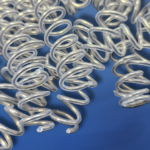
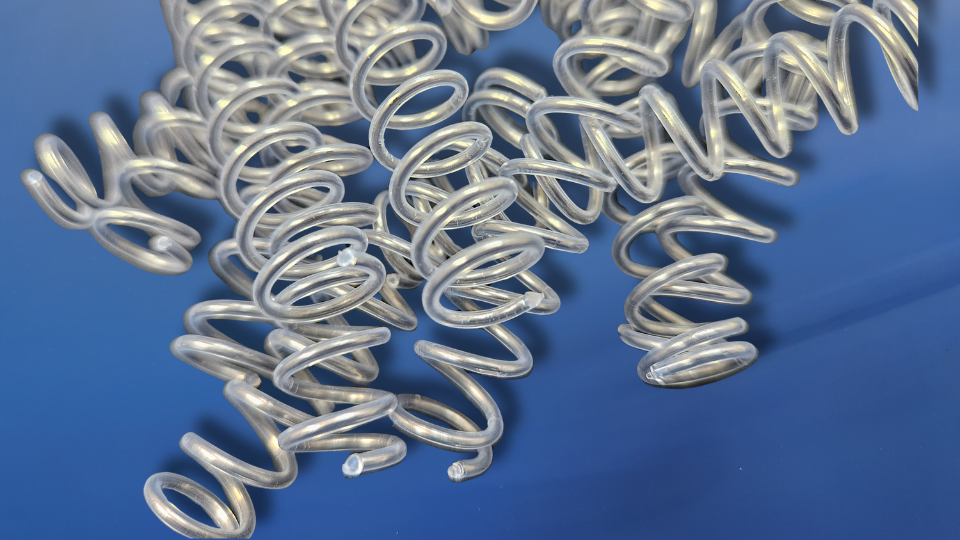
FEP’s clarity and formability can be seen in Adtech’s water-sterilisation coil case study, where thin-wall FEP tubing was thermoformed into retractable coils for use with UVC lamps. Another custom FEP tubing project used a smooth-bore tube with a 90° formed bend and enlarged ends for a fluidic vacuum-drain application.
For PFA, the precision pharmaceutical tube assembly shows a different requirement. Multiple PFA tube sizes were fused and swaged to produce very short, smooth transitions while retaining the material’s +260°C working-temperature capability. The design priority was a smooth and repeatable flow path rather than optical clarity alone.
FEP vs PFA for heat shrink and roll covers
Both materials are available in heat-shrink forms, and Adtech also manufactures FEP and PFA roll covers. PFA is generally considered when the application is more arduous or operates at temperatures beyond FEP’s range. For heat-shrink selection, the FEP vs PTFE vs PFA heat shrink guide compares the different installation and service considerations.
What if the fluoropolymer needs to be bonded?
FEP and PFA are both naturally difficult to bond because their low-surface-energy surfaces resist adhesion. Where a fabricated part needs to be bonded to a substrate, Adtech can apply chemical etching to selected areas. The adhesive system should then be validated for the specific materials and operating environment.
So, when is PFA worth choosing over FEP?
The strongest reason to move from FEP to PFA is a requirement that FEP cannot comfortably meet, most commonly continuous temperature above 200°C, a high-purity process specification or a demanding fused assembly where PFA’s performance margin is valuable. If those factors are absent, FEP often provides an effective combination of chemical resistance, clarity, flexibility and fabrication capability.
Where the choice depends on the complete assembly rather than a single property, Adtech’s R&D and product development team can help define the material, geometry and manufacturing route together.
Frequently asked questions
Is PFA better than FEP?
PFA has a higher stated working temperature and is widely available in high-purity grades, but FEP can be the better choice where its 200°C working range is sufficient and clarity, flexibility or lower-temperature fabrication are priorities.
Are PFA and FEP both melt-processable?
Yes. Both can be processed as melts, allowing extrusion, forming and welding. This is a major practical similarity between the two materials.
Which is clearer, FEP or PFA?
FEP is particularly associated with high transparency and is frequently selected where visual monitoring or UV transmission is important. PFA can also be transparent, depending on grade, wall thickness and product form.
Which is better for high-purity chemical tubing?
PFA is often the first material considered for high-purity, high-temperature and contamination-sensitive fluid handling. The required resin grade, manufacturing controls and documentation should still be specified for the application.